Nadine C.
Very good quality product Très bonne qualité du produit
Translated from French

Trending searches
Shop by budget
1 tap to filterBy age group
Compact rail
No toys found
We couldn't find any toys matching this search. Try a broader keyword or a different budget filter.
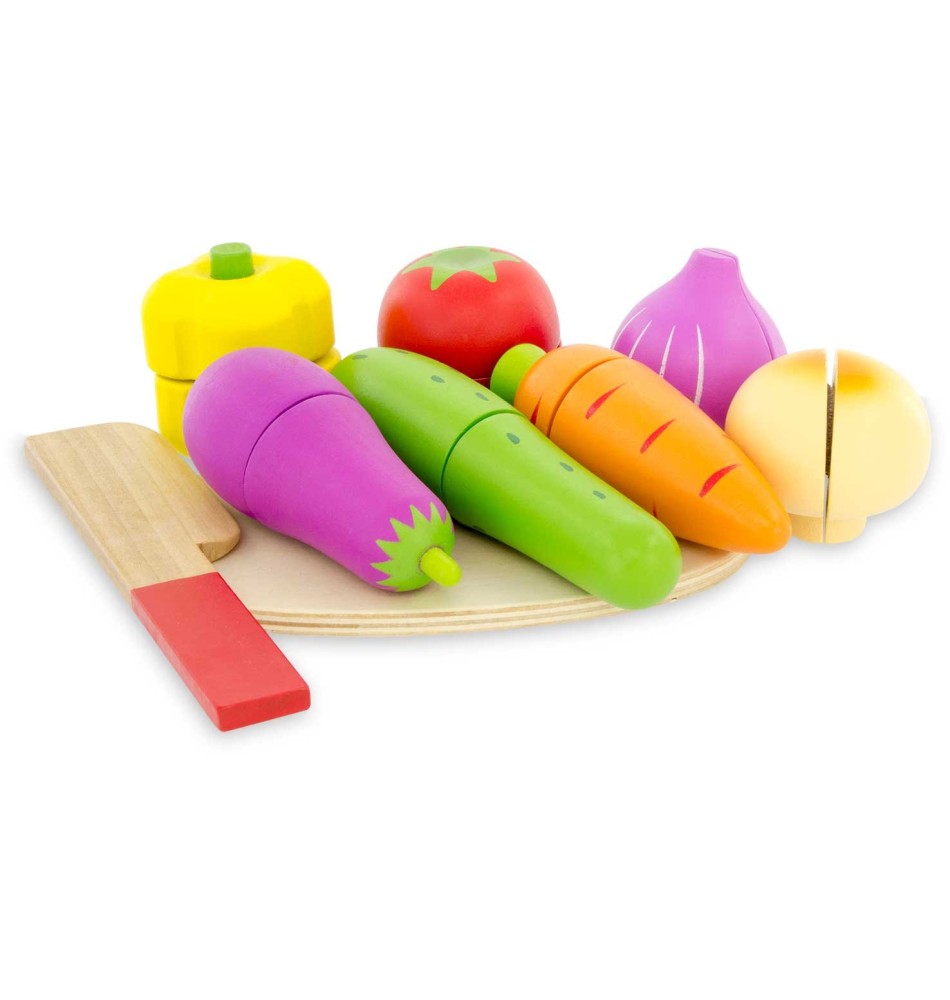
Browse all 600+ toys →Wooden vegetable toys for cutting, made for toddlers from 18 months who want a knife of their own, just like the grown-ups. The toy vegetables come apart under the blade on the little board, then everything goes back into the crate at tidy-up time. 1 knife and 1 board included.
Ref : REFU3933
Around tea time, most toddlers end up dragging a chair to the worktop and asking to help. A crate of wooden vegetables with a knife and a board is the honest answer to that request: the same job as yours, at their height, with nothing sharp in it.
The set brings together wooden vegetables made to be sliced, 1 play knife, 1 chopping board and the crate that holds them all. The crate measures 18 x 14 x 5 cm and the whole set weighs 0.85 kg, which tells you these are solid pieces with some weight in the hand, and that a child can carry the crate from the shelf to the table without help.
The crate is more than packaging. It is where the game starts and where it ends: vegetables out, vegetables sliced, vegetables put back together and returned to their box. For wooden vegetable toys that will be used every day, having one obvious home for every piece is what keeps the knife from ending up under the sofa.
The set is for children from 18 months. At that age, start together. Put the board on a low table, take out a single vegetable and show the movement slowly, without talking much: one hand holds the vegetable still, the other brings the knife down through it. Then hand over the knife and wait.
Expect the first attempts to be two-handed stabs at the board. That is normal with wooden vegetable toys of any kind. Within a few sessions the holding hand finds its place, the knife lands where the child is looking, and the vegetable falls into pieces. Putting the pieces back together is the second half of the game, and many children like it as much as the slicing.
One piece of advice: offer one or two vegetables at first, not the full crate. A toddler faced with everything at once tends to tip it out and walk away; with a single vegetable, they stay and work.
Slicing asks each hand to do a different job at the same moment, one steadying, one moving. That coordination is the same one a child will need later to hold paper while drawing, or a bowl while stirring. The knife also has to be gripped firmly and guided, which builds strength and control in the hand and wrist.
There is concentration in it too. A vegetable is either in one piece or it is not, so the child sees the result of each stroke straight away and can repeat it as many times as they like without anyone correcting them.
In a Montessori home, practical life means letting children take part in the real tasks of the household. Preparing food is the one they watch most often, and this crate gives them a version of it they can do alone. Set the board beside you while you cook and you have a small colleague slicing alongside you.
It is also a good way into talking about meals. Name each vegetable as it comes out of the crate, ask which one is going in tonight's soup, compare the wooden one with the real one on your own board. Children who have handled a vegetable in play often look at it with more interest on their plate.
Several wooden vegetable toys and sliceable sets in the shop sit close to this one. The Wooden Cutting Vegetables Play Food Set with Knife is for ages 2 and up, so this crate is the one to pick for a child of 18 months. The Wooden Vegetable Garden Play Set is about the vegetable patch, not the chopping board. And if your child would rather slice a pear than a carrot, the Montessori Wooden Slice & Cut Fruit Set does the same job with fruit; you will find it with the rest of the wooden fruit in our learning to cook range.
For a younger brother or sister who is not yet 18 months, look at our montessori infant toys and keep the crate on a higher shelf for now.
Wipe the vegetables, knife and board with a slightly damp cloth and let them dry in the open air before they go back in the crate. Do not soak them or put them in the dishwasher: wood swells when it stays wet.
This set is for children from 18 months. Play alongside your child at first, until the holding hand and the knife hand have found their rhythm.
1 knife and 1 board come with the vegetables, and the crate itself serves as storage.
It measures 18 x 14 x 5 cm, and the complete set weighs 0.85 kg.
To use both hands together, one holding and one slicing, to control a tool, and to copy a real kitchen task from start to tidy-up. It also gives you an easy way to name vegetables and talk about meals.
18 x 14 x 5 cm
0.85 kg
18m+
Durable Natural Wood
CE & EN 71 certified, solvent-free non-toxic paints
Brand New (Original packaging)
Clean with a soft cloth lightly dampened with lukewarm water. Never submerge wood in water or use harsh detergents.
To preserve natural wood lustre over the years, apply a drop of vegetable oil or beeswax once a year.
Authentic feedback from families who ordered this wooden material.
Very good quality product Très bonne qualité du produit
Other sensory and developmental materials designed for this stage of growth.