Handcrafted natural solid wood toys & safe non-toxic finishes
Practical guide • From birth to 6 years

Montessori Toys by Age A step-by-step guide from birth to 6 years

Choosing Montessori toys by age is less about a shopping list than about what your child is trying to do right now. A 4-month-old wants to grab, a 14-month-old wants to push and carry, a two-and-a-half-year-old wants to open, screw, unscrew and do it all by themselves, and a 4-year-old wants to sort, count and recognise the sounds of letters.

This guide follows those urges in the order they appear, from birth to 6: precise developmental milestones, an annotated selection of wooden toys from our catalogue, activity ideas you can set up this very evening, a summary table and the criteria for spotting a good toy. The ages given are guidelines, not deadlines: from one child to the next, the same skill can appear several months apart.

Montessori toys by age: the key points

  • 0-12 months: a few objects that are easy to grasp and safe to mouth, laid out on a mat on the floor.
  • 1-2 years: toys to push, stack and fit together, with just one challenge at a time.
  • 2-3 years: real everyday movements (opening, buttoning, pouring) and graded toys.
  • 3-6 years: letters, quantities, shapes and logic, always with hands-on materials before pencil and paper.
  • At every age: 6 to 8 toys on display on a low shelf, refreshed by rotation.
Milestones from 0 to 6
Reading time: 20 min
16 toys reviewed
Step-by-step activities
Before you choose

Developmental milestones: what your child is trying to do, from birth to 6

A well-chosen toy arrives when your child is just starting a new movement, not once they have already mastered it. The ranges below are broad averages, there to help you spot the stage your child is going through. If your child is ahead in one area or taking their time in another, that is usually perfectly normal; for any question about their development, your GP or health visitor is the right person to ask.

0 to 12 months

  • 0-3 months: Follows a high-contrast object with their eyes, discovers their hands, briefly grips a rattle slipped into their palm.
  • 3-6 months: Reaches out for an object and grabs it on purpose, brings it to their mouth, starts to roll over.
  • 6-9 months: Passes an object from one hand to the other, bangs two objects together, sits unaided, gets around in their own way.
  • 9-12 months: Picks up a small object between thumb and forefinger, looks for an object hidden in front of them, pulls up to stand by holding on.

What meets this need: objects to grasp and chew, a fabric ball, an object permanence box.

1 to 2 years

  • 12-15 months: First steps alone (anywhere between 9 and 18 months, depending on the child), drops an object into a container, slides a large ring onto a peg.
  • 15-18 months: Pushes and pulls while walking, stacks two or three blocks, fits a simple shape such as the circle into its hole.
  • 18-24 months: Carries heavy objects around, stacks higher, turns the pages of a board book, copies everyday jobs around the house.

What meets this need: a push along walker, stacking rings, a shape sorter, a pounding toy.

2 to 3 years

  • Around 2: Unscrews a lid, threads large beads, fits a range of different shapes, insists on doing things alone.
  • Two and a half: Undoes Velcro or a large press stud, pours from one jug into another, sorts by colour or by size.
  • Around 3: Completes a puzzle of a few pieces, puts things in order from biggest to smallest, holds a pencil between their fingers.

What meets this need: practical life toys, the Pink Tower, layered puzzles, building blocks.

3 to 6 years

  • 3-4 years: Takes an interest in the sounds of letters, counts small quantities, does up buttons, threads a lace through holes.
  • 4-5 years: Matches a quantity to a numeral, copies a simple figure using shapes, handles all kinds of fastenings.
  • 5-6 years: Builds words with movable letters, adds up using concrete materials, takes on longer and trickier puzzles.

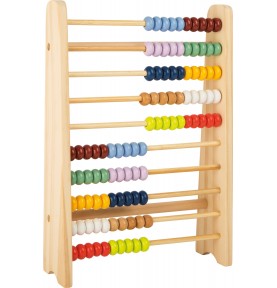
What meets this need: a lock box, lacing games, a wooden alphabet, an abacus, a tangram.

These milestones are not there to assess your child, but to help you choose. Watch them for a few days: the action they repeat without being asked (emptying a drawer, opening everything, lining things up) points to the family of toys that will interest them most at the moment. Observing before buying remains the best way to choose Montessori toys by age, because it starts from your own child rather than from an average one.

01
First year

From 0 to 12 months: sensory discovery and free movement

Full 0-12 months guide

During their first year, your baby learns mainly through their body: they look, grab, bring things to their mouth, let go and start again. They need floor space more than toys, along with a few objects they can grasp on their own.

A firm mat, a shatterproof mirror fixed low on the wall and two or three objects within reach are enough to get started. Toys then follow the pace of their movements: first things to hold and chew, then things that roll, and finally things that disappear and reappear.

Milestone 01

Moving freely on the floor

Lying on a firm mat rather than propped up in a bouncer, your baby can turn, pivot, crawl and then sit up when their body is ready. In Montessori schools, this space for the very youngest is called the Nido. At home, a corner of the living room is enough, as long as it is safe, uncluttered and always in the same place.

Tip: place an appealing object just out of reach; wanting to get to it is what motivates those first movements.
Milestone 02

Grab, let go, start again

Between 3 and 6 months, the hand starts to act on purpose: your baby reaches out, grabs and brings things to their mouth. At around 8 to 10 months, they discover that a hidden object still exists, which is known as object permanence, and they love checking it again and again. This repetition is their work: it needs neither help nor applause.

Tip: if they repeat the same movement twenty times, let them; repetition is how they learn.
Milestone 03

Real materials, one at a time

Wood, fabric and the metal of a little bell differ in weight, in temperature and in sound. Offering one or two objects at a time, in different materials, helps your baby notice these differences without being overwhelmed by colours, flashing lights and noise.

Tip: check the condition of their toys often; they bite them, bang them and throw them, and that is perfectly normal.

Best avoided before 1 year Battery-operated toys that move on their own, objects small enough to be swallowed, and clutter: three well-chosen objects, swapped from time to time, are worth more than a basket full of toys.

Our annotated selection for 0-12 months

From birthFabric
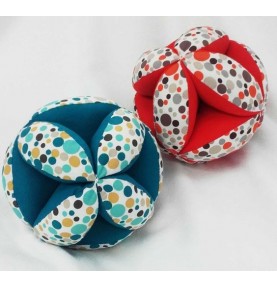
Montessori fabric clutch ball made of puzzle-shaped segments

Montessori Fabric Clutch Ball

Its fabric segments can be grasped from any side, even by a hand that is still clumsy. Placed on the mat, it doesn't roll far, so your baby can follow it and catch it again by crawling. In the version with a bell, every movement they make sets it jingling.

First monthsBeech wood
Animal-shaped teething ring in beech wood

Beech Wood Animal Teething Ring

An animal silhouette in beech, cut from a single piece to be held in a whole hand and chewed. It is often one of the first objects a baby grasps on purpose and passes from one hand to the other. Like anything that goes in the mouth, it should be used under an adult's eye.

From 8 monthsObject permanence
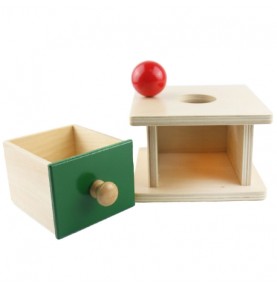
Wooden Montessori box with a ball and a drawer

Montessori Ball Box (object permanence)

Your baby drops the wooden ball into the hole, it disappears, then they find it again by opening the drawer. The rim of the box helps them hold it steady on their own. For the first presentations, as soon as they can sit unaided, take the drawer out: the ball rolls straight back out and the effect is much easier to understand.

To go further month by month, our 0-12 months guide helps you find the best baby toys for each stage and set up a Nido at home. Looking for toys for 6 month old babies? Our 6-12 months category gathers the toys suited to that age, and the ones made for chewing are grouped together in our rattles and teethers category.

02
Second year

From 1 to 2 years: first steps, stacking and shape sorting

Full 1-2 years guide

The second year is all about movement: your child stands up, takes their first steps, then doesn't want to stop. They push, pull, carry, empty and fill everything they can find.

At the same time, their hands become more precise: they begin to let go of an object exactly where they want it to go. That is what opens the door to stacking, shape-sorting and hammering toys, the kind that show straight away whether the movement worked.

Milestone 01

Walking while pushing, carrying heavy things

As soon as they can pull themselves up, children look for a support that moves forward with them. A stable push along walker first supports their early steps, then becomes a trolley for carrying their treasures around. Lugging a heavy object from one end of the room to the other is a challenge they set themselves, and one they meet with real pride.

Tip: if the walker has an adjustable brake, tighten it at first so the walker doesn't run away from your child.
Milestone 02

Letting go in the right place

Between 12 and 18 months, the pincer grip between thumb and forefinger becomes more precise. Sliding a ring onto a peg, posting a shape through the right hole, dropping a ball into an opening: these games mean letting go of the object exactly where it needs to go, and your child can see straight away whether it worked.

Tip: start with the circle, which goes in whichever way round it is held, then add the square and the triangle.
Milestone 03

One challenge at a time

At this age, a toy that mixes shapes, colours, sounds and lights scatters attention. It is better to have one toy per skill: one for stacking, one for shape sorting, one for hammering. Once one is mastered, put it away and bring out another that is slightly more demanding.

Tip: if they stack the pieces instead of posting them, they are exploring something else; follow their idea rather than the instructions.

Best avoided between 1 and 2 Sit-in baby walkers, which carry the child instead of letting them stand up on their own, puzzles with lots of pieces that put them off, and toys offering ten activities at once: your child flits from one to the next without really getting into any of them.

Our annotated selection for 1-2 years

From 1 yearAdjustable brake
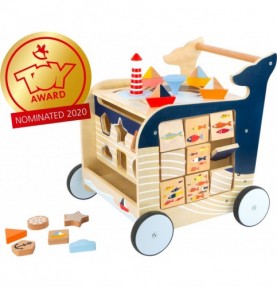
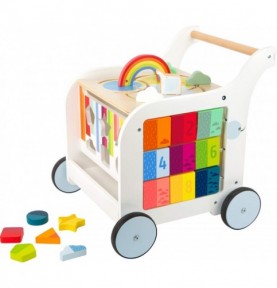
Deluxe Ocean wooden push along walker with activity panels

Deluxe Ocean Wooden Baby Walker & Activity Cart

The adjustable brake on the rear axle sets the resistance: tightened, it holds the walker steady when your child grabs it to pull up; loosened, it keeps pace with steps that have become regular. Its five play sides (shapes to post, an abacus, turning blocks, a board to draw on) and its large storage trunk keep the play going long after the first steps.

From 1 year4 graded rings
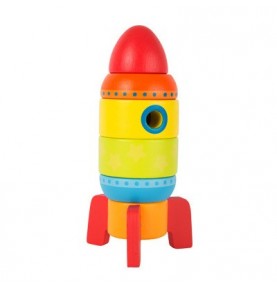
Wooden stacking ring tower shaped like a rocket

Wooden Rocket Stacking Ring Tower

Four rings in decreasing sizes and a ball on top. At first, your child mostly enjoys taking everything off the peg; a few months later, they put the rings back on, and eventually line them up from largest to smallest. Start by offering it with just one or two rings.

From 1 yearShape sorting
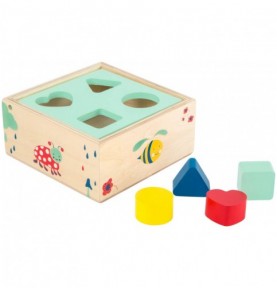
Spring Blossom wooden shape sorting box with lid

Spring Blossom Wooden Shape Sorting Box

A wooden box with a lid that opens and closes easily: each shape only goes in through its own opening. Your child fumbles, turns the piece, tries again and sees for themselves when it slips through. Lifting the lid to get the shapes back out is half the fun.

From 1 yearAim and tap
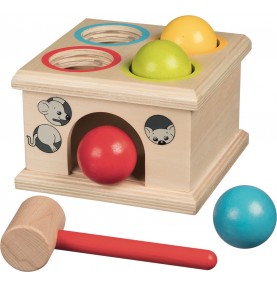
Wooden pound and roll box with 4 coloured balls and a mallet

Wooden Pound and Roll Hammer Box

With a tap of the mallet, your child sends a coloured ball down into the box, then watches it roll back out: all that's left is to do it again. A lively game that teaches them to aim and to control their strength, welcome on days when they need to let off steam.

Our guide to top rated toys for 18 month old toddlers covers these months of transition in detail, from 12 to 24 months. More Montessori toys for 1 year old children are grouped in our 0-24 months category, and every model for first steps, starting with the classic push along walker, is in our Baby Walkers category.

Torn between a push along walker and a sit-in one? Our guide to choosing a walker for 1 year old toddlers explains from what age to offer one and how to pick a stable model.

03
Third year

From 2 to 3 years: independence, practical life and first sorting

Full 2-3 years guide

Around the age of 2, ‘me do it!’ becomes the household refrain. Your child wants to open, close, pour, get dressed and help lay the table. They watch adults closely and copy what they do down to the smallest detail.

They also need order: finding everything in its place reassures them. The toys that suit them best at this age are the ones that let them really do things, with real movements, and see for themselves that they have succeeded.

Milestone 01

Order and familiar landmarks

A 2-year-old feels secure when their surroundings are predictable: the same shelf, the same tray, the same tidying-up routine. They notice straight away when something has been moved. Presenting each activity on a tray, always in the same place, helps them choose, concentrate and then put everything away on their own.

Tip: one tray, one complete activity, so your child can carry everything they need in a single trip.
Milestone 02

Practical life skills

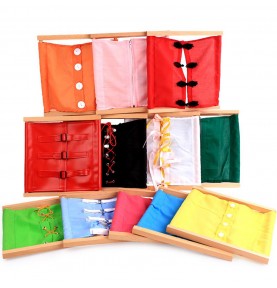
Doing up buttons, undoing Velcro, pulling up a zip, pouring, screwing on a lid: these everyday actions mean coordinating both hands and plenty of attempts. Dressing frames and activity cubes let your child practise sitting down, calmly, without the pressure of the morning rush when everyone has to leave on time.

Tip: show a single movement, slowly and without talking, then let them have a go in turn.
Milestone 03

Comparing and sorting

Big and small, heavy and light, tall and short: your child starts to compare. Graded toys, such as the Pink Tower or layered puzzles, make these differences visible and something they can feel in their hands. They also show up mistakes without an adult needing to point them out.

Tip: if they swap two cubes round, don't correct them; the leaning tower will tell them.

Best avoided between 2 and 3 Doing things for them to save time, leaving too many toys out at once, and offering games with small parts meant for ages 3 and up: even if your child seems ready, the minimum age shown on a toy takes its safety into account.

Our annotated selection for 2-3 years

From 18 months10 cubes and 10 cards
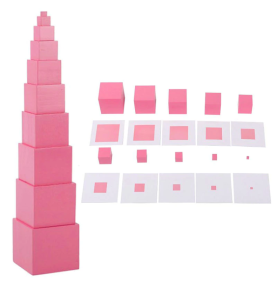
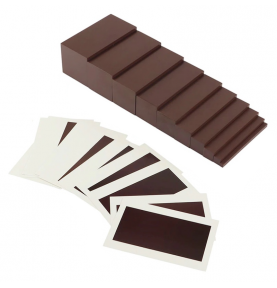
Montessori Pink Tower in wood, 10 cubes with their cards

The Montessori Pink Tower + Cards

Ten solid cubes in decreasing sizes and ten cards, each printed with a square the size of one of the cubes. The bigger the cube, the heavier it is: your child feels the difference as much as they see it. The smallest cube measures just 0.7 cm across, which is why the tower is used with an adult present.

From 2 yearsLayered puzzle
Montessori layered wooden puzzle

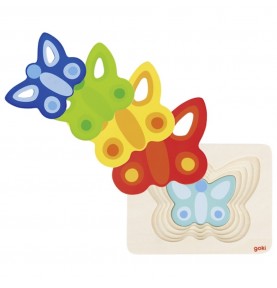
Montessori Layered Wooden Growth Puzzle

This puzzle isn't done flat but in layers: the pieces sit one on top of another in their base. Few pieces, clearly different sizes, an animal or a vehicle depending on the model, and colours to recognise: your child succeeds quickly, starts again on their own and compares sizes without even realising it.

Practical life6 sides
Fabric motor skills cube with six different fastenings

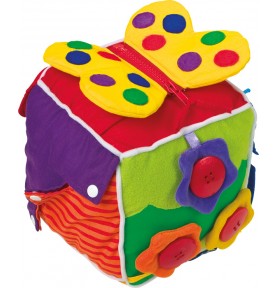
Motor Skills Activity Cube

Six fabric sides, six everyday fastenings: laces, a zip, press studs, a strap buckle, ordinary buttons and Velcro. Your child practises sitting down, at their own pace, the very movements they insist on doing alone when getting dressed.

From 2 years100 pieces
Montessori wooden building set, 100 pieces

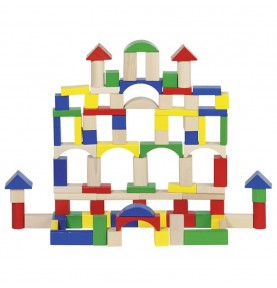
Wooden Building Blocks Set, 100 Classic Shapes

A hundred wooden blocks in a variety of shapes and colours for building, lining up and sorting. A tower that topples shows straight away that a block was badly placed, and your child adjusts it themselves. Later on, the same pieces can be sorted by shape or by colour.

Our Montessori toddler guide suggests more pouring, sorting and movement activities for this pivotal year. All our Montessori toys for 2 year olds are gathered in the 2-3 years category, and dressing frames, activity cubes and fastening games in our practical life range.

04
Nursery, Reception and Year 1

From 3 to 6 years: letters, numbers and logical thinking

Full 3-6 years guide

Between 3 and 6, curiosity turns to symbols: the letters in their name, the numbers on front doors, shapes that fit together. Your child asks lots of questions and can stay focused for a long time on an activity they enjoy.

In Montessori education, everything goes through the hand first: you touch a letter and handle a quantity before writing them on paper. The toys of this period give abstract ideas a physical form, and let your child move forward at their own pace, without worksheets or marks.

Milestone 01

Letter sounds before letter names

To prepare for reading, children hear the sound of a letter (‘mmm’) rather than its name (‘em’). They first pick out the opening sound of familiar words, then link that sound to a shape they can touch and trace with a finger. Wooden alphabet puzzles and movable letters are ideal for these sound games.

Tip: start with the letters in their own name, the ones that interest them most.
Milestone 02

Quantities they can touch

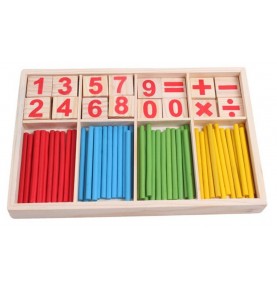
Before writing 3 + 2, a child needs to see and touch three objects, then two more. Sliding beads along an abacus, counting blocks, matching a quantity to a numeral: maths becomes a movement before it becomes a written symbol.

Tip: count aloud while touching each object, one word for each object.
Milestone 03

Logic, shapes and perseverance

Recreating a silhouette with the seven pieces of a tangram, working out how a lock opens, threading beads in a set order: these games call for observing, trying and trying again. Your child learns to look for a solution on their own, without screens or step-by-step instructions.

Tip: when they get stuck, ask a question (‘what if you turned it round?’) rather than giving the answer.

Best avoided between 3 and 6 Workbooks introduced too early, games that reward speed rather than thinking, and constant correction: a child who makes a mistake and tries again learns more than a child who is simply handed the answer.

Our annotated selection for 3-6 years

From 3 yearsLocks and bolts
Montessori wooden lock box with latches and bolts

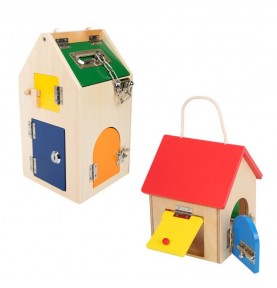
Montessori Wooden Lock Box & Latches Toy

A wooden house whose doors each close with a different mechanism: bolts, latches or locks. Your child works out how to open each door, discovers what is hidden behind it, then closes it again. Its strap means it can be carried like a little suitcase, and it comes in several sizes.

From 3 yearsLacing and dice game
Wooden bead threading game with a die and a lace

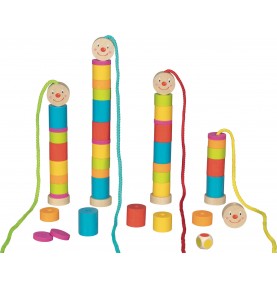
Wooden Caterpillar Threading & Lacing Game

A lacing game that can also be played with others: roll the die, thread your beads, and whoever builds the longest caterpillar wins. Holding the bead in one hand and guiding the lace with the other trains two-handed coordination and finger precision.

From 3 yearsConsonants and vowels
Wooden alphabet puzzle with red consonants and blue vowels

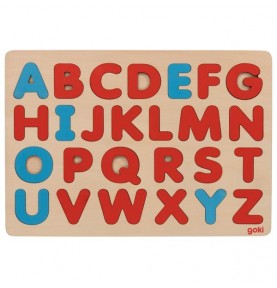
Wooden Alphabet Puzzle - Vowels & Consonants

Every letter of the alphabet, with the consonants in red and the vowels in blue. Your child starts by fitting the letters into place, then looks for the ones in their name and, later on, tells vowels and consonants apart thanks to their colour.

From 3 years7 pieces
Montessori wooden tangram, 7 pieces in their tray

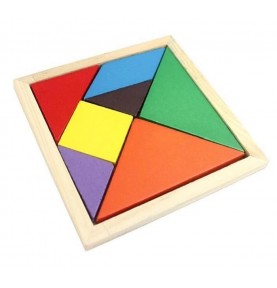
Wooden Tangram Puzzle - 7 Geometric Pieces

Seven wooden pieces, called tans, to fit back into their tray to make a square, then to arrange into silhouettes. A puzzle that grows with your child: a few simple shapes at 3, complete figures a few years later.

For a more detailed programme (sandpaper letters, first words, sums), see our guide to Montessori toys for 3 year olds. As your child grows, Montessori toys for 4 year olds are grouped in our 3-6 years category, and you will find plenty more to explore in our literacy and maths ranges.

Enjoying the tangram? Our guide to tangram shapes explains how to introduce it, from the very first shapes to the trickiest silhouettes.

To try at home

Four step-by-step play ideas, one for each age group

There is no need to buy everything to get started: these four ideas use things from around the house or a toy from our selection. They all follow the central principle of Montessori education: you show once, slowly, and then you let your child do it. Each card also sets out what the activity builds, because that is where the real benefits of Montessori toys and play lie.

0-12 months

The treasure basket

As soon as your baby can sit up, at around 6 to 9 months.

  1. 1 Gather six to eight everyday objects in different materials, all too big to be swallowed: a wooden spoon, a metal ring, a fabric ball, a small hairbrush, a cup.
  2. 2 Put them in a low, stable basket in front of your baby, sitting on their mat.
  3. 3 Sit beside them without commenting: they pick things up, taste, bang, compare and drop them.
  4. 4 Each week, swap one or two objects to keep the discovery fresh.

What it builds: grasping, passing objects from one hand to the other, discovering weights, sounds and textures.

Always stay close by and check that no object comes apart or gets damaged.

1-2 years

Filling and emptying

From the first months of walking.

  1. 1 Take a container with a wide opening (a bucket, a box) and five or six objects that are easy to pick up: fabric balls, large blocks, rings.
  2. 2 Show it just once, slowly: one object into the box, then another, then tip everything out.
  3. 3 Let them do it again as often as they like, even if they prefer emptying to filling.
  4. 4 Once they have mastered it, switch to a smaller opening, then to a shape sorter: the same movement becomes more precise.

What it builds: letting go on purpose, aiming, understanding inside and outside.

Choose objects that are bigger than their mouth and put the game away after use.

2-3 years

Pouring from one jug to another

When your child can hold a cup firmly with both hands.

  1. 1 On a tray, place two identical small jugs; one of them holds large dry pasta shapes.
  2. 2 Show the movement in silence: take hold of the handle, tilt gently, pour, put the jug down.
  3. 3 Let them pour in turn; if some pasta falls beside the jug, they pick it up with their fingers, which is all part of the exercise.
  4. 4 Once the movement is steady, replace the pasta with a little water and add a small sponge for wiping up.

What it builds: two-handed coordination, control of movement, independence at the table.

Dry pasta stays a supervised activity: put it away as soon as you have finished.

3-6 years

The sound game: I spy

As soon as your child takes an interest in letters, often around 3 or 4.

  1. 1 Place three familiar objects on a mat, with names that begin with clearly different sounds: a sock, a ball, a teddy.
  2. 2 Say: ‘I spy with my little eye something beginning with sss.’ Your child looks and points to the sock.
  3. 3 Swap roles: now it is your child who chooses the object and says its first sound.
  4. 4 When the game becomes easy, show the letter that matches the sound, for example with a wooden alphabet puzzle.

What it builds: hearing the sounds that make up words, the first step towards reading.

Keep the game short and cheerful: stop as soon as their attention drops.

At a glance

Montessori toys by age: the summary table

For each age group, the table sets out what your child is trying to do, the families of toys that meet that need and examples from our selection. Keep it handy when you are choosing a present or refreshing the shelf: if your child falls between two rows, look at the one whose skills they are just beginning.

Montessori toys suited to each age, from 0 to 6 years
Age What your child is trying to do Suitable families of toys Examples from our selection Tip for home
0 to 12 months Look, grab, bring things to the mouth, roll over, check that a hidden object still exists Objects to grasp and chew, fabric balls, an object permanence box, a floor mirror A firm mat on the floor and two or three objects at a time
1 to 2 years Walk, push, carry, stack, fit a simple shape into its hole Push along walker, stacking rings, shape sorters, pounding toys Let them carry heavy things and try on their own, without doing it for them
2 to 3 years Do it alone, get dressed, pour, compare sizes, tidy up Practical life toys, graded toys, puzzles with few pieces, building blocks One activity per tray, on a low shelf
3 to 4 years Open mechanisms, thread, recognise the sounds of letters Lock boxes, lacing games, alphabet puzzles Say the sound of each letter rather than its name
4 to 6 years Count, add, reason, copy shapes Abacus and maths materials, tangram, puzzles and brain teasers Hands-on first, pencil and paper later
Advice for parents

Introducing a new toy in 4 steps

At home, there is no need to be a trained Montessori teacher: simply observe your child and respect their pace. When you bring out a new toy, pick a calm moment and let go of any idea of a result. These four steps work at every age, from the first rattle to the tangram.

  1. Step 01

    Invite without insisting

    Choose a calm moment when your child is free and suggest: ‘I'd like to show you something, would you like to come and see?’ If they would rather carry on with what they are doing, don't insist: you can offer again later.

    Shared interest
  2. Step 02

    Show the movement slowly

    Place the toy on a low table or a small mat and make the movement slowly, saying very little. With no words to follow, your child can watch your hands with their full attention.

    Clear, slow movements
  3. Step 03

    Let them have a go

    Once you have shown the movement, offer: ‘Your turn, if you like.’ Step back a little and let them try without stepping in at the first slip: it is by adjusting their own movement that they learn.

    Confidence in their abilities
  4. Step 04

    Tidy away together

    When they have finished, suggest putting the toy back in its place on the shelf. This little ritual brings the activity to a close, gives them the satisfaction of having finished and gets them used to looking after their things.

    Order and independence

Protecting their concentration When your child is absorbed in play, try not to interrupt to praise or help them: even a heartfelt compliment can break their focus. A look or a smile is enough. You can talk about what they did once the activity is over, describing rather than judging: ‘You put all the rings back on.’

Simple, practical criteria

What makes good Montessori style toys? 6 criteria to help you choose

Plenty of toys carry a ‘Montessori’ label without following its spirit. Before you buy, ask yourself these six questions: if the answer is yes to most of them, the toy deserves a place on the shelf, whatever your child's age. To understand the principles behind them, read our page on the Montessori method of teaching.

Criterion 01

Your child does the work

The toy waits for your child to act instead of springing into life by itself. A toy that flashes and sings at the press of a button does the work in their place; a shape sorter only fills up if your child looks for the right hole. With no batteries and no screen, it is their own movement that brings the object to life.

The question to ask: What does my child do with this toy, and what does the toy do by itself?

Criterion 02

One challenge at a time

A good toy isolates one concept: size, shape, colour or sound. The Pink Tower, for example, varies only in the size of its cubes, which are all the same colour. Your child's attention goes to what matters, without being scattered by decorative details.

The question to ask: Can I say in one sentence what this toy helps my child practise?

Criterion 03

Mistakes show without an adult

A shape that won't go in, a tower that leans, a ring left over at the end: your child sees for themselves that something has gone wrong and puts it right. In Montessori education, this is called control of error. They no longer wait for an adult to tell them whether it is right, and their confidence grows.

The question to ask: Can my child tell on their own whether they have succeeded?

Criterion 04

Made for their hands and their age

Pieces their hands can grasp, a weight they can carry, a minimum age that takes small parts into account. A toy that is too easy bores them and one that is too hard discourages them: aim for the skill they are in the middle of acquiring, not the one they have already mastered.

The question to ask: Which movement is my child repeating at the moment?

Criterion 05

Real materials

Wood, fabric, metal: each has a weight, a temperature and a sound of its own. They tell the hand far more than uniform plastic does. A well-cared-for wooden toy also lasts for years and is often passed down from one child to the next.

The question to ask: What does my child feel in their hand when they hold it?

Criterion 06

Simple, complete and easy to put away

A plain toy whose pieces all fit on a tray or in a box has its own place on the shelf: your child takes it, uses it and puts it back. Toys whose pieces are jumbled together in a big toy box get lost, get damaged and end up ignored.

The question to ask: Where will this toy be kept, and can my child put it away alone?

The classic pieces found in Montessori classrooms, such as the Pink Tower and the cylinder blocks, are gathered in our Montessori materials category. To find out what each one is for and in what order to introduce them, our guide What are Montessori toys? presents them one by one. And to browse our full range of wooden Montessori toys, our home page sorts them by age and by theme.

Organising your home

Montessori play toys at home: a play corner that grows with your child

Even the best toy loses much of its appeal at the bottom of a toy box. In the Montessori approach, the space matters as much as the objects: everything your child needs is at their height, in view and kept in a fixed place. There is no need to turn the living room into a classroom; a few adjustments are enough, and they change as your child grows.

0-12 months

A mat and a mirror

A firm mat or a thick blanket on the floor, a shatterproof mirror fixed low on the wall, a basket or a small shelf with two or three objects. Your baby spends their awake time here, first on their back and then on their tummy, with room to roll and crawl.

1-2 years

A low shelf and room to walk

A low, stable shelf fixed to the wall, with four to six toys spaced out so your child can see each one. Keep a clear path for getting around with the push along walker, and a tub they can fill and empty as much as they like.

2-3 years

Trays and a table their size

A small table and chair at their height, one activity per tray, a low hook for their coat and a step stool so they can wash their hands on their own. At this age, independence plays out as much in the bathroom and the hallway as in the play corner.

3-6 years

A quiet corner for concentrating

A quiet spot for letters and numbers, a small rug that marks out their work space on the floor, and a shelf where activities are arranged from the simplest to the hardest. Your child chooses on their own and knows where each thing goes back.

Toy rotation: how it works

  1. 1 Keep six to eight toys on display and store the rest out of sight, in a cupboard or a closed box.
  2. 2 Watch for one to two weeks: which toys are picked up every day, and which ones are no longer touched?
  3. 3 Put away those that are ignored or too easy, and bring out one or two toys in their place.
  4. 4 Leave favourites out for as long as they are being used: rotation follows your child, not the calendar.
  5. 5 Bring a stored toy back out a few weeks later: it feels new again, and your child often looks at it with fresh eyes.
Safety first Fix shelves and low furniture to the wall, check the condition of toys regularly and respect the minimum age shown on each one. When an older brother or sister shares the space, store their games with small parts up high: what suits a 4-year-old can be dangerous for a baby who still puts everything in their mouth.
Pitfalls to avoid

Common mistakes when choosing kids' Montessori toys by age

These mistakes nearly always come from good intentions: wanting to do the right thing, not wanting to miss anything, wanting to help. Simply knowing about them is often enough to avoid them.

Buying too much, too soon

For fear of missing a stage, it is tempting to fill the cupboards with toys for the months ahead. The result: your child is overwhelmed, and some of the toys are never used at the right moment.

Better: Buy for the current stage, and jot down one or two ideas for the next one.

Relying only on the age on the box

The age shown is first of all a safety minimum, and only then a rough average. It doesn't tell you whether your child is interested in that skill today, or whether they have already moved beyond it.

Better: Respect the minimum age, then compare it with what your child is already doing.

Leaving everything out

Thirty toys on view at the same time means thirty invitations to flit about. Your child goes from one to another without settling on any of them, then tires of the lot.

Better: Six to eight toys on the shelf, and a rotation every two or three weeks.

Helping or correcting too quickly

The reflex of turning the piece for them, or saying ‘no, not there’, robs your child of the discovery they were about to make. A good toy shows the mistake all by itself.

Better: Wait a few seconds longer, watch, and only step in if they ask you to.

Thinking wood is enough

A toy isn't Montessori just because it is made of wood. A wooden toy that does everything for the child, or mixes ten different concepts, is no more Montessori than any other toy.

Better: Run every toy through the six criteria above, whatever it is made of.

Comparing with other children

Their cousin was walking at 10 months, the little girl next door already knows her letters: comparisons like these push you towards toys that are too hard, and turn play into a test.

Better: Compare your child with how they were a month ago: that is where their progress shows.

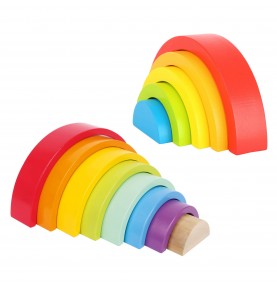
The question of materials comes up a lot with stacking rainbows: our Montessori rainbow comparison of wooden and plastic models explains what really changes for your child, beyond appearances.

Parents' questions

Your questions about choosing toys by age

Answers to the questions families ask us most often, from the very first rattle to the first sums.

Montessori toys by age: what is the short answer?

From 0 to 12 months, objects to grasp and chew, a fabric ball, then an object permanence box at around 8 months. From 1 to 2 years, toys to push, stack, sort and hammer. From 2 to 3 years, practical life toys (fastenings, pouring) and graded toys such as the Pink Tower. From 3 to 6 years, games built around letter sounds, quantities and logic: a wooden alphabet puzzle, an abacus, a tangram. Whatever the age, start from what your child is trying to do right now rather than from their exact age in months.

At what age can you start with Montessori toys?

From the very first weeks. At the beginning, this mainly means a firm mat on the floor, a shatterproof mirror fixed low on the wall and a few objects to look at. In the first months, an easy-to-grasp fabric ball or a wooden teething ring goes along with the first deliberate movements. Toys then change as your child grows: things to push and stack at around 1, practical life at around 2, then letters, numbers and logic from 3 onwards.

Which Montessori style toys do you actually need at home?

None of them is essential, and there is no need to buy everything. The method rests first and foremost on an attitude: trusting your child, preparing a space at their height and giving them time to try things on their own. A few well-chosen toys for the current stage are enough, alongside everyday objects in their size: a small jug, a sponge, a dustpan and brush. Choose toys where your child does the work, that focus on a single challenge and that show mistakes without an adult having to point them out.

How many toys should you put out at once?

Six to eight toys on display on a low shelf is plenty. Beyond that, attention scatters and your child moves from one toy to the next without really stopping at any of them. Keep the others out of sight and rotate them: every two or three weeks, take away the ones that are ignored or have become too easy, and bring out one or two others. A toy that comes back after a few weeks often regains all its appeal.

My child isn't interested in their toy, or uses it differently: is that a problem?

No. Every child develops at their own pace and is drawn to some skills more than others. If they stack the pieces instead of fitting them in, they are simply exploring something else at that moment, such as balance or height. Let them carry on without correcting them. If the toy stays untouched, put it away for a few weeks and then offer it again: it often arrives at just the right moment the second time round.

My child is between two age groups: which toy should I choose?

Look at the skills they are just starting, not the ones they have already mastered. A 20-month-old who stacks and sorts shapes with ease may be ready for graded toys or first fastenings, while another child of the same age will still mostly want to push and carry. Choose from the age group whose skills they are discovering, and always respect the minimum age shown on the toy.

Can you give a toy designed for 3-year-olds to a younger child?

It is best not to. The minimum age shown on a toy reflects its safety, in particular small parts that could be swallowed by a child who still puts things in their mouth. Even if your child seems ready, wait until they reach the age shown; to help them take a skill further, look instead for a toy designed for their age that works on the same thing, with bigger pieces.

Why are Montessori toys so often made of wood, and what are the benefits?

Because wood tells the hand a great deal: it has a real weight, a grain and a temperature that changes to the touch. A bigger cube is also a heavier one, which helps your child compare sizes. A well-cared-for wooden toy also stands up to knocks and drops, and is often handed down from one child to the next. Wood on its own is not enough, though: the main benefit of a Montessori toy lies first in what it lets your child do.

How do you introduce a new toy to your child?

Choose a calm moment and invite them to come and see, without insisting if they are busy with something else. Show the movement once, slowly, saying very little, then let them have a go without stepping in at the first slip. When they have finished, put the toy back in its place on the shelf together. These four steps work at every age, from the first rattle to the tangram.

Which Montessori toy makes a good birthday present?

For a first birthday, a stable push along walker or a stacking toy. For a second birthday, a practical life toy such as a motor skills cube, or the Pink Tower. For a third birthday, a lock box or a lacing game. At 4 or 5, an abacus or a tangram. If you don't know the child's tastes very well, a set of wooden building blocks suits several ages and can be played with in countless ways.

Signature Selection

Our Wooden Educational Toys

A curated selection of durable sensory materials to support natural child development.