



You've discovered all toys in this category!
Guide & Pedagogy: Geometry & Shapes
Development advice and benefits of the Montessori method
Montessori Geometry & Spatial Shapes
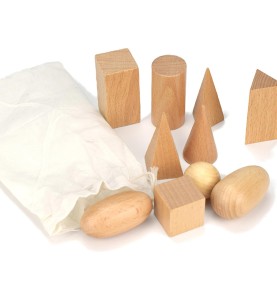
Geometry in the Montessori classroom is a sensorial experience before it becomes an abstract discipline. By feeling three-dimensional geometric solids and manipulating planar shapes, children gain intuitive insight into spatial form, volume, and geometry.
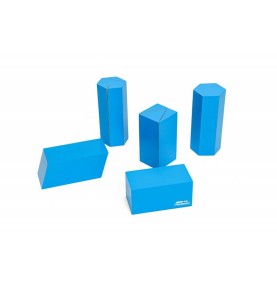
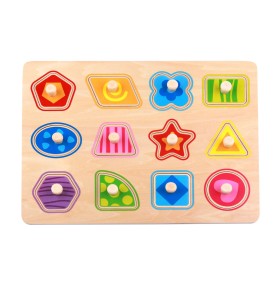
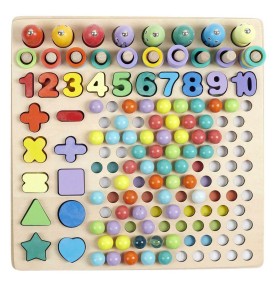
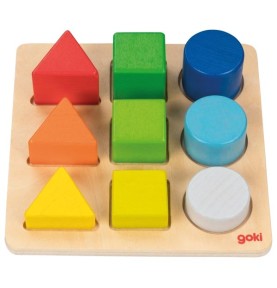
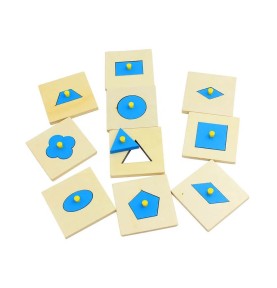
Our wooden geometric cabinets, shape-sorting boards, and solid solids provide tactile mastery of spheres, prisms, cubes, and cones, bridging the gap between tactile touch and geometric logic.
- Sensory Shape Exploration: Solid wood pieces let children feel vertices, edges, and curved surfaces.
- Spatial Vocabulary: Introduces accurate terminology—triangles, hexagons, cylinders, and pyramids—organically.
- Visual Discrimination: Sharpens the eye for symmetry, dimensions, and proportional relationships.
Development Guides for "Geometry & Shapes"
Montessori Toys 3 to 6 Years: Language, Mathematics & Logic
Golden beads, sandpaper letters and tactile manipulation of quantities.
Wooden Tangram: Sensory Geometry & Patience
The 7 wisdom shapes to develop spatial awareness and problem-solving skills.
The Montessori Method: The 9 Founding Pedagogical Pillars
Nurturing autonomy, the absorbent mind and adult guidance according to Maria Montessori.